Services
High-level collaboration – Solar solves the logistics of Rope Access
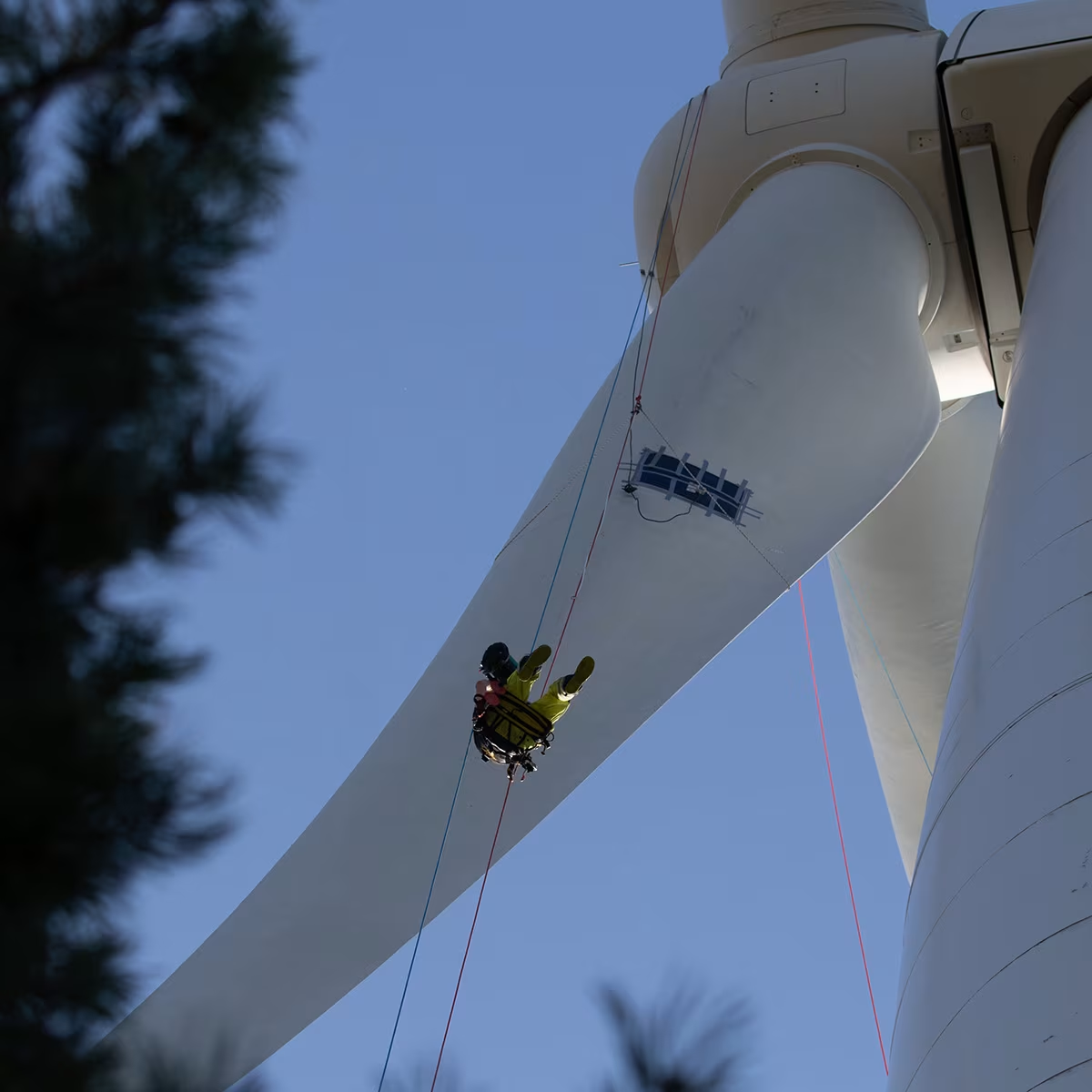
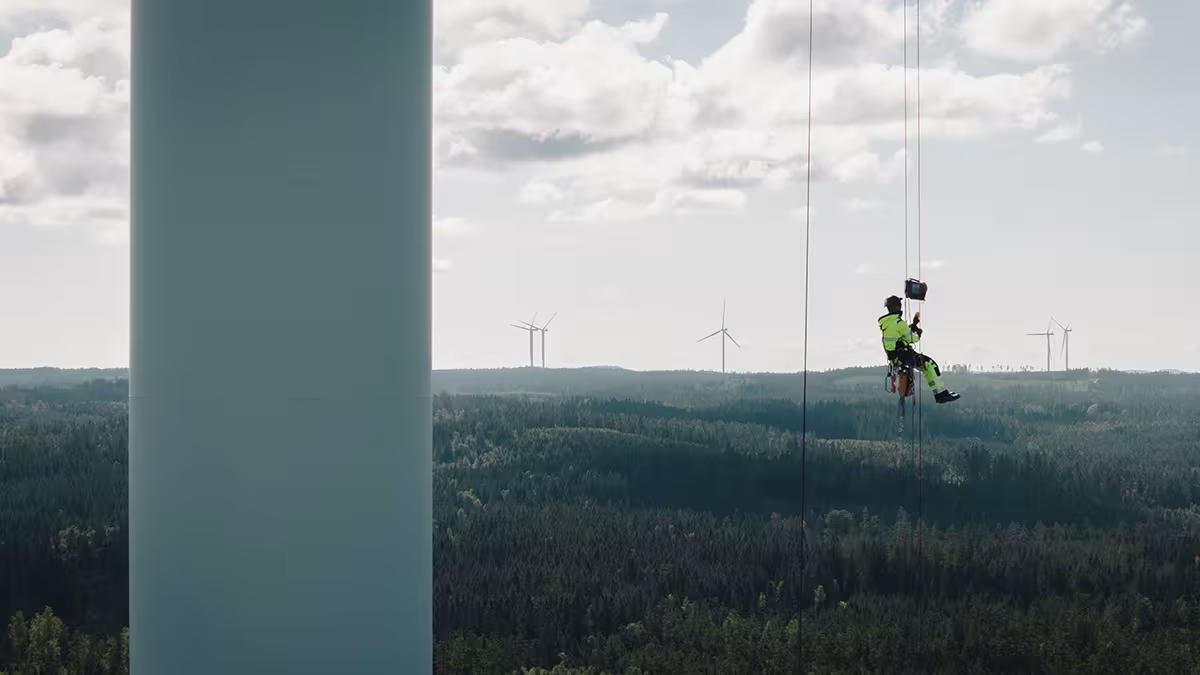
At Solar, we deliver to many types of workplaces. One of the rarer is our Swedish customer Rope Access. They are experts in repairing the blades of wind turbines – a job that usually takes place at a height of 150 meters.
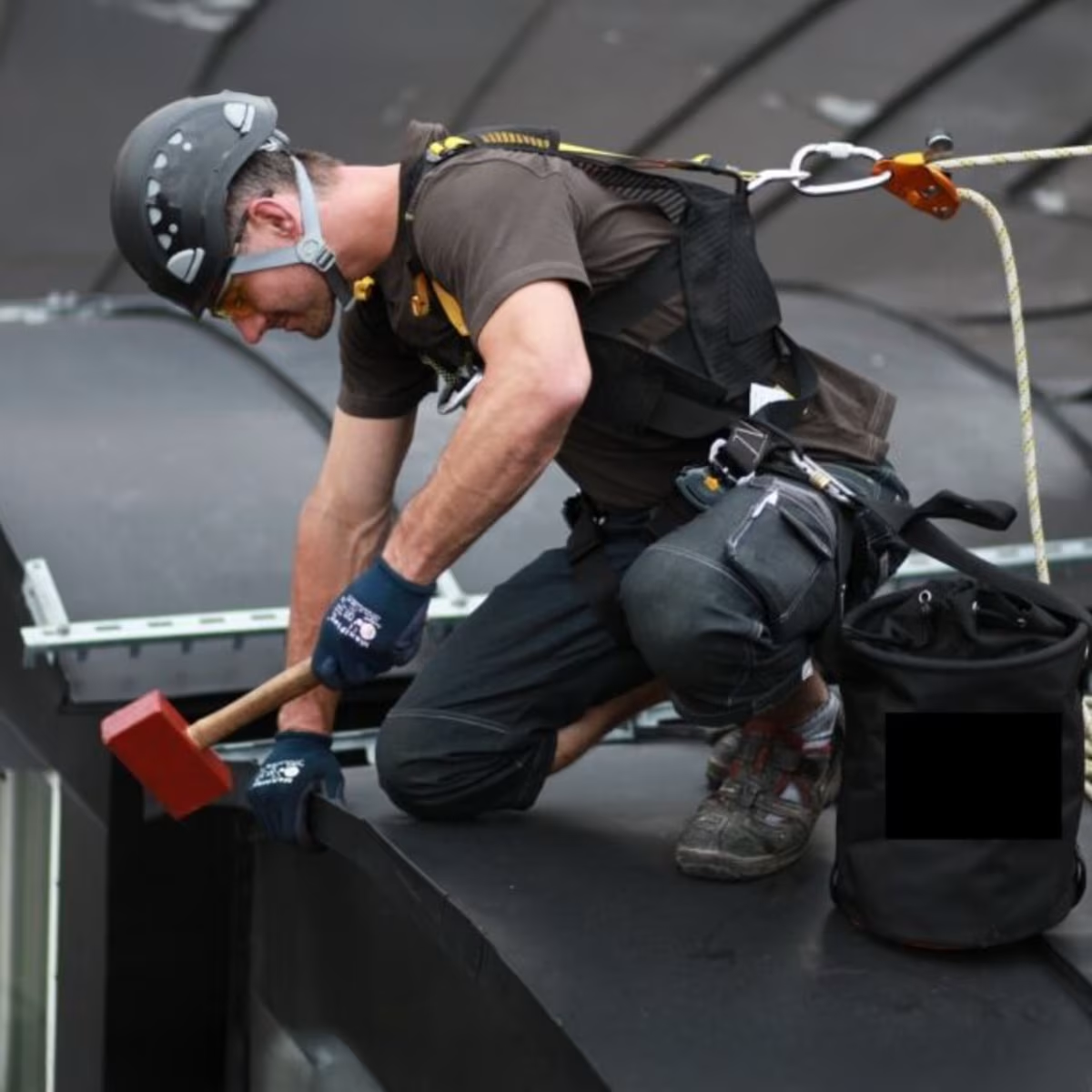
Rope Access is a working method called industrial rope work. The method means that the rope technician can work from hanging ropes, which enables safe work at high altitudes and other places that are otherwise difficult to access.
In 1997, a company with the same name was founded in Sweden. Rope Access Sweden AB originally performed work on many types of buildings, but since a few years back, the company has been completely focused on wind turbines, and more specifically on repairing the blades of wind turbines.
- We have a very clear niche, and as the number of wind turbines has rapidly increased in recent years, we have also had a lot more to do. The wind turbine blades break relatively often, and even if it is only a small damage, you want to fix it quickly before it gets bigger, says Tobias Wange, Material Manager at Rope Access.
Working from ropes
The blade of a wind turbine can be damaged in many ways. For example, large birds can fly into them, but they can also suffer from lightning strikes, cracks or erosion on the sharp edge, the so-called leading edge. Regardless of what caused the damage, it is almost always repaired in the same way; on site – 150 meters up in the air.- For the most part, these blades are made of fibreglass. So, the repairs are based on removing the material and adding new. It's not really an advanced job, the challenge is how it's done. The work is done on site, hanging from ropes. So it's important not to have a fear of heights if you're going to have this job, says Tobias Wange, and continues:- If there is major damage that needs to be repaired, we can use hanging racks instead. They are attached to wires at the top of the wind turbines. With a scaffold, you can stand a little more stable, which makes it easier in case of large damages.
Extensive material flow
Rope Access has grown rapidly in recent years and today has a turnover of SEK 130 million. As the number of jobs has been scaled up, the need for materials has also increased significantly. To meet these needs, Rope Access has been working with Solar for some time.
- We use a lot of materials. Partly in the form of hand tools and fastening materials, but we also need a lot of protective equipment; disposable suits, gloves and the like. I think that we buy 90% of all our consumables from Solar, says Tobias Wange.
- We have received a lot of help from Solar, who make sure to stock the items we use – although I can imagine that we are the only ones who buy some of these items. They have also helped us get in touch with specific suppliers, who we may not have been able to get in touch with otherwise.
Smart warehouse solution
Rope Access has its orders delivered weekly to its facility in Gothenburg, where they then distribute the materials to the technicians themselves. The in-house warehouse also uses Solar's Smart Supply systems; clearly marked corrugated cardboard boxes with name, image and barcode.- It is a very good system for us. During the high season, we go through the shelves every week, where we scan what is running out with the app. Then the items are automatically included in the next delivery. It's very convenient and allows you to keep track of your own materials, says Tobias Wange.For the past two years, the company has also had 28 service vehicles with modular shelf systems. These are also continuously filled with material from Solar.- Together with Solar, we have been able to develop a flow of materials that helps us a lot. We always get fast deliveries, and when we have odd requests, it is usually always possible to solve. We can really recommend Solar as a partner.
TEXT: MAGNUS CARLSSON PHOTOS: ROPE ACCESS